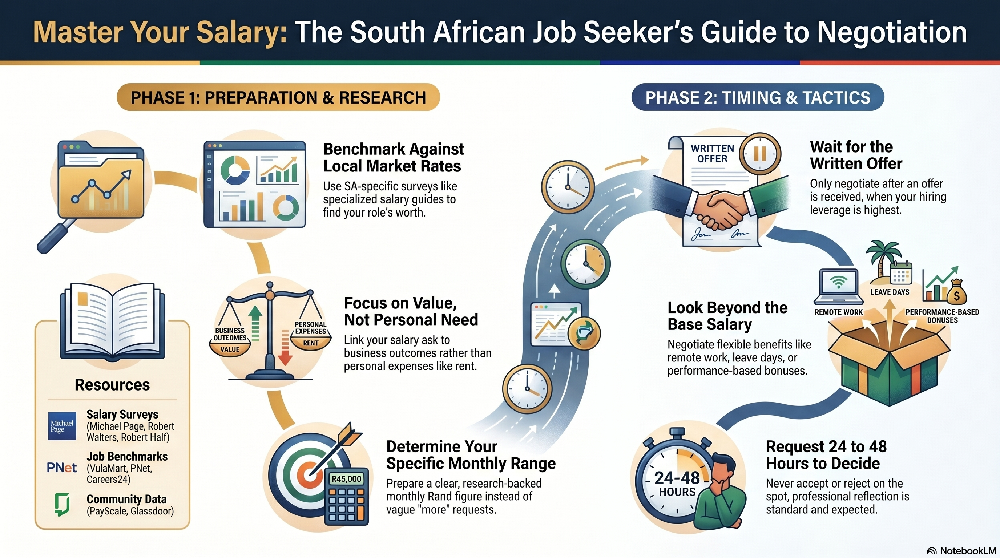
The best way to negotiate your salary in South Africa is to wait until you have a written offer, research the market rate, and make a clear counter-offer based on your experience and value. Many job seekers accept the first number because they fear losing the opportunity, but a professional salary negotiation is normal and expected. This guide explains when to negotiate, how to prepare your salary range, what to say, what benefits to consider, and the common mistakes to avoid before accepting a job offer.
When to Negotiate
Negotiate after you receive a written offer, not during
the interview. The offer stage is when you have the most leverage. The company
has decided they want you. They have invested time and resources in the
process. A reasonable counter-offer will not scare them off.
Do not bring up salary in a first interview unless the
interviewer raises it. If asked for your expectations early on, give a range
based on market research rather than a fixed number.
How to Research Market Rates
Before you negotiate, know what the role is worth. Use
salary surveys from Michael Page, Robert Half, or Robert Walters for
SA-specific data. Check PayScale and Glassdoor for additional benchmarks. Look
at similar job ads on VulaMart, PNet, and Careers24 to see what employers are
offering.
Factor in your experience level, location, and the
industry. A software developer in Cape Town earns differently from one in
Polokwane. A finance role in banking pays differently from the same title in an
NGO.
How to Make Your Counter-Offer
Be specific. "I was hoping for more" is weak.
"Based on market research and my seven years of experience in the sector,
I believe R38,000 per month reflects the value I bring to this role" is
specific and professional.
Focus on value, not need. "I need more because my
rent went up" is irrelevant to the employer. "My experience in
[specific skill] directly addresses the challenge your team is facing with
[specific project]" ties your ask to business outcomes.
What Else You Can Negotiate
Salary is not the only number on the table. Consider
negotiating leave days, remote work flexibility, a performance bonus structure,
professional development budget, or a shorter review period for a salary
increase. Sometimes a company cannot move on base salary but has flexibility on
benefits.
Common Mistakes
Do not give an ultimatum unless you are genuinely
prepared to walk away. Do not compare your salary to a colleague’s. Do not
negotiate via email if you can do it in person or on a call. Tone matters, and
written messages can come across as demanding when spoken words would not.
Do not accept or reject on the spot. Ask for 24 to 48
hours to consider the offer. This is standard and expected.
Find
jobs matched to your skills and salary expectations →
vulamart.co.za/jobs